JUMP Training: "Developing Mission-Critical Web Applications with Elixir and React.js"
By the end of the training, participants will have gained practical proficiency in the Elixir programming language and its entire application ecosystem (React.js, Riak, WebFlow), which are essential for developing high-availability distributed systems.
This course is designed for individuals with some prior experience in software development who wish to learn Elixir and React.js in order to build mission-critical web applications with high performance requirements.
Throughout the course, participants will complete a full-scale project from start to finish, which they will present during the final assessment to earn their certification.
Prerequisites: Bachelor’s degree in computer science or web development, or Master’s degree in computer science.
Program – 4 weeks of training, organized into 9 modules:
- Introduction to Elixir and Functional Programming
- GenServers, Supervisors, and ETS Tables
- Handling HTTP requests with Cowboy and Plug
- Designing and creating web interfaces with WebFlow
- Front-end/Back-end Interconnection (“RemoteProps”)
- Databases and indexing with Riak and SolR
- Server-side rendering in Elixir with “Reaxt”
- State management and transactionality with “ExFSM”
- Routing of HTTP requests with “EWebMachine”

The training program alternates between several types of sessions:
- E-learning courses and hands-on practice
- Code reviews and personalized support
- Individual assessments
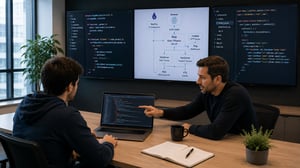
Methods and Tools
- Access to a comprehensive resource platform
- Provision of a training kit: lectures, hands-on exercises, source code, and resources needed for the project
- 10% of the time spent in synchronous sessions with instructors
- 90% of the time dedicated to the overarching project, with ongoing support via Slack from our software engineers
From the start of the training program, each participant is assigned a mentor to monitor their progress, answer their questions, and tailor the program to their pace and skill level. Two mentoring sessions are held each week.
Participants work on a concrete project aimed at production. This project allows them to gradually progress toward situations similar to those encountered in a professional setting. Weekly check-ins with the mentor ensure skill development and the transition from theory to practice.
.png?width=400&height=115&name=KBRW-logo-400x115%20(1).png)